
4 minute read
In our last article, we looked at why talent is not enough by discussing that a talented player may start ahead, but that does not guarantee where they finish. A developing player may start behind, but with the right habits, feedback and environment, they can keep moving forward.
So the next question should be:
If talent does not guarantee success, what actually helps players improve?
You would be forgiven for thinking, practice, practice, practice but the answer is not simply more training. More training can help. More games can help. More touches can help. But only if the player understands what they are trying to improve and why.
Without direction, development becomes guesswork. A player can train three times a week, play every weekend, work hard, listen to the coach, and still not really understand whether they are improving. For real development to occur, it cannot be random, instead it has to be structured, guided and purposeful.
Repetition Alone Is Not Enough
There is a big difference between repeating something and improving something. A player can repeat the same mistake for months. They can keep receiving the ball with the same poor body shape, they can keep making the same rushed decision, they can keep drifting out of games without understanding why.
From the outside, it may look like they are working hard but development starts when the player understands what needs to change. Not vaguely. Specifically.
For example, it might be
receiving on the back foot
scanning earlier
reacting quicker after losing possession
making more supporting runs
using their weaker foot more often
staying involved when the game moves away from them
The detail matters.
Players do not improve properly by being told to “work harder” or “want it more.” They improve when the work has a clear purpose.
See It. Decide It. Execute It.
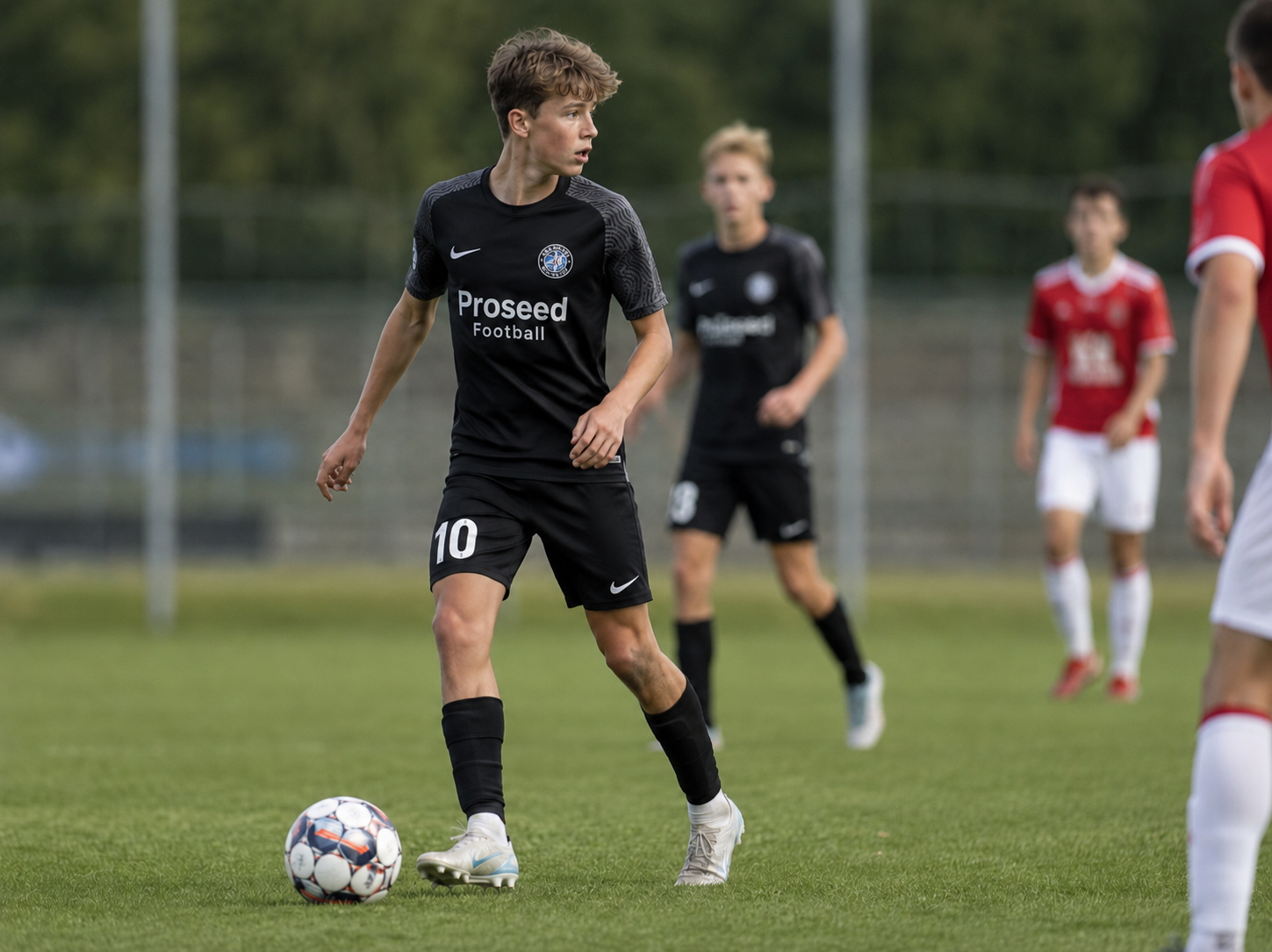
Football is not just a technical game. It is not just a physical game. It is not just a tactical game. It is all of those things happening at the same time. A player has to see what is happening, decide what to do, then execute the action under pressure. That is where development really lives.
A good player does not just have a nice touch. They know why the touch matters. They know where the pressure is coming from. They know where the next pass might be. They know when to play quickly, when to carry the ball, when to support, when to press and when to recover. That does not happen by accident, it is learned. Then it has to be repeated in situations that look and feel like the game.
This is why isolated technical work has value, but it is not enough on its own. A player can look sharp in a drill and still struggle in a match if they cannot connect the skill to the decision.
Development is not just about making a player cleaner technically, it is about helping them become more effective in the game.
Football is not just a technical game. It is not just a physical game. It is not just a tactical game. It is all of those things happening at the same time. A player has to see what is happening, decide what to do, then execute the action under pressure. That is where development really lives.
A good player does not just have a nice touch. They know why the touch matters. They know where the pressure is coming from. They know where the next pass might be. They know when to play quickly, when to carry the ball, when to support, when to press and when to recover. That does not happen by accident, it is learned. Then it has to be repeated in situations that look and feel like the game.
This is why isolated technical work has value, but it is not enough on its own. A player can look sharp in a drill and still struggle in a match if they cannot connect the skill to the decision.
Development is not just about making a player cleaner technically, it is about helping them become more effective in the game.
Why Players Plateau
Most young players do not stop improving because they suddenly lose ability, they plateau because the next step becomes unclear.
They keep training, but they are not sure what they are working towards. They get feedback, but it is too vague. They play matches, but nobody helps them properly understand what happened. They rely on what already works, rather than building what is missing.
This can happen to talented players and developing players. The talented player may lean too heavily on natural ability. The developing player may work hard but not know where the improvement is supposed to come from.
In both cases, the player needs better information.
Feedback Has to Be Useful
Feedback is one of the most important parts of development, but only if the player can actually use it.
Telling a player they “need to get involved more” might be true, but it is not enough. What does that actually mean? Do they need to offer better angles? Move earlier? Scan more often? Show for the ball in different areas? Improve their first touch so they can receive under pressure? Increase their work rate? Be braver?
The more specific the feedback, the easier it becomes for the player to act on it.
Good feedback should help a player understand what they are doing well, what needs to improve, and what they should do next.
That last part matters most.
The player needs something they can take back into training and matches. Something clear enough to work on. Something measurable enough to track. Something realistic enough to apply. That is when feedback becomes development.
Development Has to Show Up in Games
Training improvement matters, but the real test is whether it transfers into matches.
Can the player make a better decision when tired? Can they still receive under pressure? Can they react quickly when possession changes? Can they keep supporting teammates when they are not the one on the ball?
This is where development often gets misunderstood.
Parents naturally notice the obvious things: goals, assists, big tackles, strong runs and saves. Those moments matter, but they are only part of the picture.
A player may be improving in ways that are less obvious, such as better positioning, more involvement, quicker decisions, improved movement, more balanced use of both feet, better reactions after losing the ball, more consistent intensity.
These are the details that shape long-term development, they are also the details that are easy to miss without proper analysis.
The Player Must Take Ownership
Coaches matter. Parents matter. Environment matters — but the player still has to own the process.
That does not mean young players should be left to figure everything out alone. It means they need to gradually understand their own game.
They need to know what they are good at, where they are vulnerable, what progress looks like, and how to respond when things are difficult. If video of their matches exists, they should watch it back — not to criticise themselves, but to learn. They should also watch pros and other good players in their position and start noticing the small details: movement, body shape, scanning, decision-making and reactions when possession changes.
A player who understands their game has a better chance of improving it, a player who is always waiting to be told what to do will only go so far.
The best development creates thinking players, not dependent players.
What Good Development Looks Like
Good development is not complicated, but it does need structure.
The player needs a clear starting point, an honest view of their strengths and weaknesses, and a small number of focus areas. Training should connect directly to the game, with feedback clear enough to act on. Then they need time to apply it, review what is working, and understand the next step.
That cycle matters because development is not a straight line, some weeks are better than others, some games make progress obvious, other games expose problems. That is normal because the key is not perfection, the key is direction.
Is the player moving forward? Are they becoming more aware? Are they making better decisions? Are they more consistent? Are they starting to influence games in clearer ways?
That is what matters.
Clarity Changes Everything
Talent may give a player a head start, but clarity gives them a pathway.
When players understand their performance, they train with more purpose. When parents understand development, they stop judging only by highlights. When coaches have better information, they can give better feedback.
That is where player development becomes more powerful.
At Proseed Football, the focus is not on guessing whether a player is talented enough.
The focus is on helping players understand where they are now, what needs to improve, and how to take the next step.
Because players do not develop properly through labels.
They develop through clarity, feedback, ownership and purposeful work.
That is how improvement becomes real.