
Coaching vs Player Development: Why the Difference Matters
4 minute read
Most parents assume that when their child goes to football training, they’re developing. That makes sense, there’s a coach, there are drills, there’s a game at the weekend. It looks like development.
But most of the time, it isn’t.
What Coaching actually is
What your child is usually getting is coaching. And coaching, on its own, is not the same thing as player development. That distinction matters more than people realise. A coach’s job is to manage a team. They’re thinking about shape, tactics, who plays where, and how to get a result on the weekend. Training sessions are often built around that—getting players to understand roles, patterns, and how the team should function together.
There’s nothing wrong with that. Football needs coaching. Teams need structure. But here’s the issue: your child isn’t a team. They’re an individual. In a team environment—especially at grassroots level—individual development is often secondary to what the team needs right now. If your child is quick, they’ll be told to run in behind. If they’re strong, they’ll be used to win duels. If they’re technically safe, they’ll be told to keep the ball moving. It works in the moment. It helps the team. But it doesn’t always help the player improve.
What Player development is
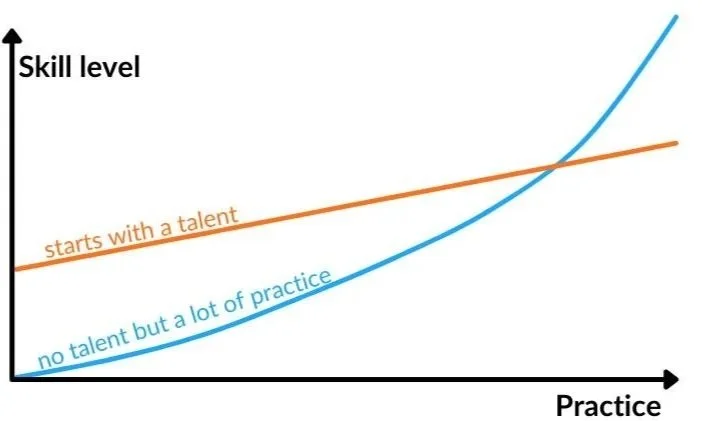
Player development: Point of crossover
Player development works differently. Instead of asking, “How do we win this weekend?” it asks, “What does this player need to get better over the next 6–12 months?” That’s a completely different mindset. It means looking at things like: How comfortable they are on both feet ? How often they get on the ball ? What decisions they make under pressure ? Where do they struggle physically or technically?
And then doing something about it.
Not guessing. Not assuming. Actually measuring it, tracking it, and building a plan around it.
Research into youth sport has been saying the same thing for years—long-term development comes from focusing on the individual, not just the outcome ([Sports-based youth development]). And even at elite level, player progression is seen as a long, non-linear process shaped by environment, opportunity, and the right type of support—not just match performance. In other words, improvement doesn’t just happen because a player is playing games.
Why this matters for your child
But here’s the part most environments miss entirely: You can’t fully understand the player if you don’t understand the person. This isn’t just opinion—it’s backed by how modern sport is evolving. Research into athlete-centred coaching shows that performance improves when you understand what drives the individual—things like intrinsic motivation, confidence, identity, and personal goals—not just their physical output.
And at academy level, the best development environments are now designed around the whole person, not just the footballer—balancing performance, wellbeing, and life skills as part of the same process.
Put simply, if you ignore the person, you risk limiting the player.
For example, two players can have identical data:
Same speed
Same work rate
Same technical level
But one lacks confidence, avoids risk and doesn’t enjoy training. Those things don’t show up clearly in raw numbers—but they can indicate how far that player will go.
That’s why just collecting data isn’t enough.You need context.
This is exactly why Proseed builds in consultation as part of the development process. Not as a formality. Not as a “nice to have.” But as an integral part of our development approach.
Those conversations uncover things you won’t see in a session.
Research around youth development consistently highlights the importance of relationships, communication, and understanding the athlete’s environment as key drivers of long-term progression. Without that, you’re only working with half the picture.
The challenge with Grassroots Football
Grassroots football often leans heavily towards results. Not always deliberately, but it happens. Coaches want to win. Players want to win and one of the Parents like to see their child in a successful team.
So decisions get made that prioritise the short term:
Playing the strongest players more minutes
Putting players in positions where they’re already effective
Avoiding risks that might cost the game
Again, none of this is wrong in isolation. But over time, it creates a gap. Because the things that help a team win today aren’t always the things that help a player improve tomorrow.
That’s why you often see players dominate at 12 or 13 and then disappear a few years later. Early success is often driven by physical development or confidence, not a complete skillset.
Without proper development, those advantages fade.
So what should parents actually be looking for?
Not just “Is my child enjoying it?” or “Is the team winning?” but:
Do we understand the player beyond what we see on the pitch?
Is there a clear, individual plan based on that understanding?
Are we developing the person as well as the footballer?
Because without that, most players just repeat the same cycle every week—train, play, repeat—without ever really understanding how to get better.
This is the gap Proseed Football is built around. Not replacing coaching. Not competing with teams. Just focusing on the part that usually gets missed. Understanding the player, understanding the person, then building a plan that connects both. When this is achieved you unlock the player and all of their development potential.
